About Conference
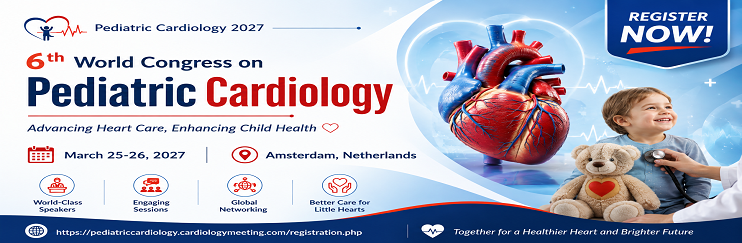
The 6th World Congress on Pediatric Cardiology will take place on March 25–26, 2027, in Amsterdam, Netherlands. This prestigious event will unite global experts to explore the latest advancements, challenges, and innovations in pediatric cardiology. Under the theme " From Tiny Hearts to Brighter Futures: Advancing Pediatric Cardiac Care," the congress aims to improve outcomes and quality of life for children with heart conditions through research, clinical excellence, and international collaboration.
The congress will feature keynote speeches, scientific sessions, hands-on workshops, and case discussions covering topics like early diagnostics, surgical innovations, and emerging technologies such as AI and regenerative medicine. Participants will gain insights into translational research, personalized treatments, and collaborative care models.
Ideal for pediatric cardiologists, surgeons, researchers, fellows, nurses, and healthcare policymakers, this event offers CME accreditation and valuable networking opportunities. The program is designed to foster dialogue, spark new ideas, and drive forward the future of pediatric cardiac care.
Join us in Amsterdam for two days of impactful learning, connection, and shared commitment to shaping a healthier future for children worldwide. Let’s turn today’s breakthroughs into tomorrow’s standards in pediatric cardiology.
Target Audience
-
Pediatric Cardiologists
-
Cardiac Surgeons
-
Pediatricians
-
Medical Researchers & Scientists
-
Cardiology Fellows & Residents
-
Pediatric Cardiac Nurses
-
Allied Health Professionals
-
Clinical and Biomedical Engineers
-
Hospital Administrators
-
Healthcare Policymakers
-
Pharmaceutical and Medical Device Companies
-
Academic Professionals and Educators
-
Students and Trainees in Pediatric Cardiology
-
Non-profit and Patient Advocacy Groups
Sessions and Tracks
Track-1: Congenital Heart Disease: Diagnosis and Management
This session explores the latest advancements in diagnosing and managing congenital heart defects (CHDs), the most common type of birth defect. It will cover the role of fetal echocardiography, new-born screening, and advances in imaging technologies. Experts will discuss current surgical and non-surgical interventions, with a focus on individualized treatment strategies. The session also highlights multidisciplinary approaches that combine cardiology, cardiac surgery, neonatology, and genetics. Case studies will demonstrate how early diagnosis and comprehensive care pathways improve long-term outcomes and quality of life for children with CHD.
Track-2: Fetal Cardiology and In-Utero Interventions
This track focuses on early detection and intervention strategies for fetal cardiac conditions. Topics include fetal echocardiography advancements, in-utero diagnosis of structural and rhythm abnormalities, and emerging fetal cardiac interventions. The session emphasizes the importance of prenatal counseling and multidisciplinary team management. Presentations will explore the ethical considerations and long-term follow-up of fetuses undergoing cardiac therapy. Delegates will gain insights into how early prenatal interventions can significantly impact postnatal cardiac outcomes and maternal-fetal health.
Track-3: Pediatric Cardiac Surgery and Innovations
This session will cover modern surgical techniques and technological innovations transforming pediatric cardiac surgery. From minimally invasive procedures to 3D-printed heart models and robotic-assisted surgeries, speakers will highlight how these tools enhance surgical precision and reduce recovery time. The session also discusses timing of surgery, risk stratification, and perioperative care strategies that improve patient outcomes. Case-based presentations will illustrate best practices for complex congenital defects, re-operations, and managing low-birth-weight neonates. This track offers surgeons and cardiologists insights into evolving surgical paradigms that support faster healing and long-term survival.
Track-4: Pediatric Interventional Cardiology
Interventional cardiology in children is rapidly evolving, offering non-surgical solutions to many congenital and acquired heart problems. This track will explore catheter-based therapies for septal defects, valve abnormalities, coarctation of the aorta, and pulmonary artery stenosis. Experts will present current evidence, device innovations, and procedural outcomes. Emphasis will be placed on hybrid procedures and the integration of advanced imaging for precise catheter guidance. Attendees will also learn about the long-term follow-up and potential complications associated with interventional procedures, making this session essential for practitioners aiming to adopt or refine less invasive treatment strategies.
Track-5: Arrhythmias and Electrophysiology in Children
This session addresses the evaluation and management of arrhythmias in pediatric patients. Topics include diagnostic techniques such as Holter monitoring, event recorders, and electrophysiological studies. Presentations will discuss common and complex rhythm disorders supraventricular tachycardia, long QT syndrome, and congenital conduction abnormalities. Special focus will be given to catheter ablation techniques, pacemaker and ICD implantation, and genetic contributions to rhythm disorders. Case-based discussions will highlight emergency management strategies and long-term monitoring. The session aims to equip clinicians with tools for early detection and tailored treatment plans that enhance quality of life and prevent sudden cardiac events.
Track-6: Heart Failure and Cardiomyopathies in Children
Pediatric heart failure and cardiomyopathies pose diagnostic and therapeutic challenges due to their rarity and complexity. This track will explore the etiology, pathophysiology, and current classification of pediatric cardiomyopathies, including dilated, hypertrophic, restrictive, and arrhythmogenic types. Sessions will cover pharmacologic therapies, mechanical circulatory support (e.g., ECMO, VADs), and indications for heart transplantation. Emphasis will be placed on genetic testing, family screening, and long-term management strategies. Presenters will share recent clinical trials and outcomes, offering a comprehensive understanding of how to manage children with compromised heart function and how to integrate care with adult cardiomyopathy programs.
Track-7: Advances in Cardiac Imaging and Diagnostics
High-resolution imaging technologies are revolutionizing pediatric cardiology by enhancing diagnostic accuracy and surgical planning. This session will delve into the use of echocardiography, cardiac MRI, CT angiography, and 3D modeling in diagnosing congenital and acquired heart diseases. Presenters will discuss case examples showcasing the strengths of each modality, especially in complex or rare anomalies. Advances in artificial intelligence and machine learning in cardiac imaging will also be highlighted. Attendees will gain insights into best practices for selecting imaging modalities based on patient age, condition, and clinical scenario paving the way for more precise and personalized care.
Track-8: Genetics and Molecular Cardiology in Pediatrics
This track highlights the growing role of genetic and molecular research in understanding pediatric cardiovascular disorders. Sessions will explore the genetic basis of congenital heart disease, inherited arrhythmias, and cardiomyopathies. Experts will discuss the application of whole genome sequencing, gene panels, and epigenetics in diagnostics and risk stratification. The session will also explore the future of gene editing and gene therapy in cardiology. Attendees will gain a better understanding of genetic counseling, family screening protocols, and the ethical considerations surrounding genetic data in pediatric populations.
Track-9: Pulmonary Hypertension in Children
Pulmonary hypertension (PH) in pediatric patients is a serious condition requiring early identification and specialized management. This session will address classification, etiology, and pathophysiology of PH in neonates, infants, and children. Presentations will review updated diagnostic algorithms, risk stratification tools, and imaging findings. Pharmacologic treatment options including prostanoids, endothelin receptor antagonists, and PDE-5 inhibitors will be discussed in light of recent guidelines. The track will also include multidisciplinary approaches, including cardiac catheterization and management of PH in children with congenital heart disease or chronic lung disease.
Track-10: Neonatal Cardiology and Critical Care
This session focuses on the specialized care required for neonates with critical congenital heart defects (CCHDs) and other cardiovascular emergencies. Topics include early screening, stabilization in neonatal intensive care units (NICUs), and timely referrals to cardiac centers. Speakers will discuss the use of prostaglandins, mechanical ventilation strategies, and metabolic management. Sessions will cover collaborative NICU-cardiology protocols and highlight success stories from tele-cardiology and mobile screening programs. The goal is to improve survival and reduce morbidity in newborns through early detection, coordinated care, and rapid decision-making.
Track-11: Cardiac Transplantation in Pediatrics
Pediatric heart transplantation is a life-saving option for children with end-stage heart disease. This track will review patient selection criteria, donor matching, surgical considerations, and post-transplant care. Attendees will learn about the use of mechanical assist devices as a bridge to transplant, innovations in immunosuppressive therapy, and strategies to monitor for rejection. The session will also examine long-term outcomes, psychosocial aspects, and quality of life in pediatric transplant recipients. Case studies will provide practical insights into overcoming challenges in complex transplant cases.
Track-12: Rheumatic Heart Disease and Inflammatory Cardiac Conditions
Although more common in low- and middle-income countries, rheumatic heart disease (RHD) continues to affect pediatric populations globally. This session will explore the epidemiology, diagnosis, and treatment of RHD and other inflammatory conditions such as Kawasaki disease and myocarditis. Presentations will cover the role of echocardiography in detecting valvular damage, antibiotic prophylaxis, and surgical interventions when required. Emphasis will be placed on prevention programs, early treatment of streptococcal infections, and global efforts to reduce RHD burden. The track will also highlight immune-mediated cardiac injury in COVID-related MIS-C.
Track-13: Preventive Cardiology and Lifestyle Modification
This session focuses on early cardiovascular risk factor identification and lifestyle-based prevention strategies in children. Topics include the impact of obesity, hypertension, dyslipidemia, diabetes, and sedentary behavior on long-term heart health. Presenters will offer evidence-based approaches for promoting heart-healthy habits in children and adolescents, including nutrition, exercise, and family-centered interventions. The role of school-based programs and digital tools for lifestyle education will be highlighted. The session emphasizes prevention as a foundation for a lifetime of cardiovascular well-being, particularly in high-risk pediatric groups.
Track-14: Artificial Intelligence and Digital Health in Pediatric Cardiology
This forward-looking track explores how AI and digital tools are transforming pediatric cardiac care. Topics include machine learning applications in ECG and imaging interpretation, AI-assisted diagnostics, telecardiology platforms, and mobile health monitoring devices. Presenters will demonstrate real-world uses of wearable technology, predictive modeling for disease progression, and virtual follow-ups. Ethical considerations, data privacy, and regulatory challenges will also be addressed. This session offers a glimpse into the future of pediatric cardiology, where technology enables early detection, precise treatment, and continuous patient engagement.
Track-15: Cardiac Nursing and Allied Health in Pediatrics
Cardiac care is a multidisciplinary effort, and this session recognizes the critical roles played by nurses and allied health professionals. Topics include patient and family education, post-operative care, emotional support, and nursing roles in cardiac catheterization labs and surgical units. Presenters will discuss best practices in patient monitoring, medication management, and rehabilitation services. Sessions will also highlight training needs, communication strategies, and inter-professional collaboration to enhance patient outcomes. The goal is to empower nurses and allied teams as key pillars in holistic pediatric cardiac care.
Track-16: Global Health and Equity in Pediatric Cardiology
This session focuses on disparities in access to pediatric cardiac care across different regions and populations. Topics include challenges in low-resource settings, global surgery initiatives, and models for mobile outreach and telemedicine. Speakers will discuss collaborations between high-income and low-income countries, capacity building through training programs, and innovations in affordable diagnostics. Real-world success stories and partnerships will be highlighted, showing how global efforts can bridge gaps and bring life-saving cardiac care to underserved children around the world.
Track-17: Pharmacology and Drug Therapy in Pediatric Cardiology
This session will explore the latest pharmacologic treatments used in managing pediatric cardiac conditions. Topics include antiarrhythmics, antihypertensives, heart failure medications, anticoagulants, and post-surgical drug management. Presenters will address pediatric-specific dosing, side effects, and pharmacokinetics. The track will also cover recent clinical trials, drug development, and future therapeutic targets. Special sessions will discuss medication adherence in children and innovations like personalized drug therapy through pharmacogenomics.
Track-18: Psychosocial and Developmental Issues in Pediatric Cardiology
Chronic heart conditions affect more than just the body they impact mental, emotional, and social well-being. This track will address psychosocial challenges faced by children with heart disease, including anxiety, depression, peer relationships, and academic performance. Speakers will explore family dynamics, sibling support, and caregiver stress. The session also examines developmental delays and the role of neuropsychological assessments. Attendees will learn strategies for integrating mental health support into cardiac care plans to ensure comprehensive and compassionate treatment.
Track-19: Sports and Physical Activity in Children with Heart Conditions
This session examines how to safely integrate physical activity into the lives of children with cardiac conditions. Topics include pre-participation screening, exercise restrictions, individualized activity plans, and the benefits of physical activity on heart health and emotional well-being. Presenters will discuss how to assess fitness levels, manage risk, and support children in school and community sports. The goal is to encourage appropriate, safe physical activity that enhances quality of life while minimizing risk.
Track-20: Future Directions in Pediatric Cardiac Research
This concluding track highlights emerging research shaping the future of pediatric cardiology. Topics include stem cell therapy, tissue engineering, immunomodulation, and bioresorbable devices. Leading researchers will share findings from cutting-edge trials and propose new directions for innovation. The session also encourages collaboration across disciplines engineering, genetics, pharmacology, and clinical practice to push boundaries and improve outcomes. Attendees will leave inspired to contribute to the next generation of life-saving advances in pediatric heart care.
Participant Options & Benefits
Pediatric Cardiology_2027 offers a variety of participation options designed to cater to professionals, researchers, students, and industry representatives, ensuring a valuable and enriching experience for all attendees.
Presenter Registration:
-
Share your research through oral or poster presentations.
-
Receive constructive feedback from global experts in pediatric cardiology.
-
Gain recognition with publication opportunities in conference proceedings or affiliated journals.
Delegate Registration:
-
Attend all scientific sessions, keynote addresses, and symposia.
-
Participate in networking events with leading pediatric cardiologists and healthcare professionals.
-
Receive conference materials including abstract books and the official program.
Student Registration:
-
Discounted rates for students pursuing academic programs.
-
Access to educational sessions, career forums, and networking lounges.
-
Showcase student research through poster presentation opportunities.
Industry Registration:
-
Exhibit booth space for promoting medical devices, technologies, and services.
-
Network with leading researchers, clinicians, and institutional decision-makers.
-
Gain visibility and build brand recognition among pediatric healthcare professionals.
Virtual Attendance:
-
Participate in live-streamed sessions and access recorded content on demand.
-
Engage in interactive Q&A sessions and virtual networking events.
-
Join the conference conveniently from any location worldwide.
Benefits for Participants:
-
Stay informed about the latest breakthroughs and trends in pediatric cardiology.
-
Connect and collaborate with top-tier researchers, clinicians, and innovators.
-
Enhance your clinical knowledge and research skills through workshops and expert-led sessions.
-
Discover collaborative projects, research funding opportunities, and career pathways.
-
Earn CME/CPD credits to support your continuing professional development.
Join us in Amsterdam, Netherlands, for an inspiring event that bridges knowledge and practice in pediatric cardiology. Whether you are a researcher, clinician, student, or industry stakeholder—this is your platform to learn, share, and grow.
Register now and help shape the future of pediatric cardiac care at Pediatric Cardiology_2027.
Market Analysis
Global Pediatric Cardiology Market Overview: The pediatric cardiology market is witnessing steady growth driven by rising birth rates, increasing prevalence of congenital heart defects (CHDs), technological advancements, and growing awareness of pediatric heart care. As of 2023, the global pediatric cardiology market was valued at approximately USD 12.3 billion and is projected to reach USD 18.7 billion by 2030, growing at a CAGR of 6.1%.
Key Market Drivers: The surge in CHDs affecting nearly 1 in every 100 live births is a major driver. Technological innovations such as 3D imaging, minimally invasive surgical techniques, wearable cardiac monitors, and AI-driven diagnostics are transforming pediatric cardiac care. Additional growth factors include rising global pediatric populations and improved healthcare access in developing regions.
Regional Insights: North America holds the largest market share due to advanced healthcare systems and robust R&D investment. Europe, especially countries like Germany, France, and the Netherlands, also maintains a strong presence. The Asia-Pacific region is the fastest-growing due to increasing population, awareness, and healthcare reforms in countries like India and China.
Industry Trends: Emerging trends include the expansion of pediatric heart transplant programs, the adoption of tele cardiology for post-operative monitoring, and the integration of genomics and precision medicine in diagnosing hereditary heart disorders. Multidisciplinary care models are also gaining traction.
Market Challenges: Despite growth, challenges remain especially the shortage of pediatric cardiologists in low-income areas, high procedural and equipment costs, and regulatory barriers related to pediatric-specific devices.
Conclusion: Pediatric cardiology is a rapidly expanding field within global healthcare. Pediatric Cardiology_2027 provides an essential platform for knowledge exchange, research collaboration, and clinical innovation aimed at improving outcomes for children with heart conditions.
Conference Agenda
DAY 1 AGENDA
|
Time
|
Session
|
Details
|
|
08:30 – 09:30 AM
|
Registration & Welcome Coffee
|
Participant registration and networking
|
|
09:30 – 10:00 AM
|
Inaugural Ceremony & Welcome Address
|
Opening remarks by Organizing Committee
|
|
10:00 – 10:30 AM
|
Opening Keynote Speech
|
Keynote lecture by an eminent speaker
|
|
10:30 – 11:00 AM
|
Networking Break
|
Refreshments and interaction
|
|
11:00 AM – 01:00 PM
|
Scientific Session I: Advances in Pediatric Cardiology Diagnosis & Management
|
|
Latest developments in congenital heart disease diagnosis, fetal echocardiography, advanced imaging, catheter-based diagnostics, and clinical decision-making
|
|
|
01:00 – 02:00 PM
|
Lunch Break
|
Buffet lunch and networking
|
|
02:00 – 04:00 PM
|
Scientific Session II: Congenital Heart Disease – From Diagnosis to Intervention
|
Surgical and interventional approaches, neonatal cardiac care, complex congenital lesions, long-term outcomes, and multidisciplinary management
|
|
04:00 – 04:30 PM
|
Coffee Break
|
Informal discussions and refreshments
|
|
04:30 – 06:00 PM
|
Panel Discussion
|
Discussion on AI-assisted diagnosis, tele-cardiology, advanced imaging, personalized medicine, and emerging technologies
|
|
06:00 – 06:15 PM
|
Closing Remarks
|
Summary of Day 1 sessions
|
|
07:00 PM onwards
|
Welcome Dinner & Networking Reception
|
Evening social gathering for delegates
|
DAY 2 AGENDA
|
Time
|
Session
|
Details
|
|
09:00 – 09:30 AM
|
Morning Coffee & Networking
|
Start the day with informal discussions and collaboration opportunities
|
|
09:30 – 11:00 AM
|
Scientific Session III: Advances in Pediatric Cardiac Surgery & Interventions
|
Recent surgical techniques, minimally invasive procedures, transcatheter interventions, hybrid procedures, and postoperative care
|
|
11:00 – 11:30 AM
|
Coffee Break
|
Refreshments and networking
|
|
11:30 AM – 01:00 PM
|
Scientific Session I: Advances in Pediatric Cardiology Diagnosis & Management
|
Latest developments in congenital heart disease diagnosis, fetal echocardiography, advanced imaging, catheter-based diagnostics, and clinical decision-making
|
|
01:00 – 02:00 PM
|
Lunch Break
|
Buffet lunch and networking
|
|
02:00 – 03:30 PM
|
Scientific Session V: Preventive & Long-Term Care in Pediatric Cardiology
|
Echocardiography, cardiac MRI, CT imaging, fetal cardiac assessment, and innovations in cardiac diagnostics
|
|
03:30 – 04:00 PM
|
Networking Break
|
Interaction and collaboration among participants
|
|
04:00 – 05:30 PM
|
Poster Presentations & Young Researcher Forum
|
Presentations from emerging researchers and poster contributors
|
|
05:30 – 06:00 PM
|
Awards & Certificate Distribution
|
Recognition of best presentations and closing ceremony
|
|
06:00 – 06:15 PM
|
Vote of Thanks & Closing Remarks
|
Appreciation note and conclusion of the conference
|
Abstract Review Process
All abstracts submitted to the 6th International Conference on Pediatric Cardiology will undergo a rigorous and structured peer-review process conducted by the Conference Scientific Committee and qualified subject-matter experts. The review process is designed to maintain high standards of scientific quality, clinical relevance, originality, and academic integrity.
Each abstract will be evaluated based on:
-
Relevance: Alignment with the conference theme, scope, and scientific tracks.
-
Originality: Novelty and scientific contribution of the research, findings, or clinical approach.
-
Scientific Quality: Clarity of research objectives, methodology, analysis, and results.
-
Clinical Significance: Potential relevance to pediatric cardiovascular diagnosis, treatment, prevention, and patient care.
-
Academic Contribution: Potential contribution to advancing knowledge and practice in pediatric cardiology and related disciplines.
-
Quality of Presentation: Organization, clarity, accuracy, and overall quality of the submitted abstract.
Authors will be notified of the review outcome within the designated review timeline. Abstracts meeting the required scientific and academic standards may be accepted for oral, poster, or virtual presentation during the conference.
The Organizing Committee is committed to maintaining a fair, transparent, consistent, and academically rigorous review process that encourages innovative research, interdisciplinary collaboration, and meaningful scientific exchange in pediatric cardiology, congenital heart disease, cardiovascular medicine, pediatric cardiac surgery, and related fields.
VISA Process
The 6th International Conference on Pediatric Cardiology is committed to supporting international participants by providing the necessary documentation to assist with their visa application process for attending the conference in Amsterdam, Netherlands.
Once registration and payment have been successfully confirmed, the Organizing Committee may provide the relevant supporting documents, as applicable, including:
-
Official Conference Invitation Letter
-
Conference Registration Confirmation
-
Proof of Registration and Payment
-
Detailed Conference Program or Scientific Schedule
-
Accommodation Confirmation, if accommodation has been arranged through the conference organizers
These documents are intended to assist participants in preparing their visa applications and meeting the documentation requirements of the relevant Embassy or Consulate of the Netherlands in their country of residence.
General Visa Requirements
Visa requirements may vary depending on the participant's nationality and individual circumstances. Applicants may generally be required to provide:
-
A valid passport
-
Completed visa application form
-
Official conference invitation letter
-
Conference registration confirmation and payment receipt
-
Proof of accommodation and travel itinerary
-
Travel insurance, where applicable
-
Evidence of sufficient financial means, where required
-
Any additional supporting documents requested by the relevant embassy or consulate
Participants are strongly advised to consult the official Dutch Embassy or Consulate in their respective country for the latest visa requirements and application procedures.
We recommend that participants initiate their visa application at least 6–8 weeks before the conference to allow adequate time for appointment scheduling, document processing, and potential administrative delays.
In Case of Visa Rejection: Refund & Participation Options
We understand that visa decisions are made by the relevant diplomatic authorities and may vary according to individual circumstances. In the event of an official visa rejection, the following options may be available, subject to the conference terms and conditions:
-
Participants may request to switch to Virtual Presentation or Virtual Participation without additional charges, where applicable.
-
Refund requests must be accompanied by an official visa rejection letter issued by the relevant embassy or consulate.
-
Refund requests should be submitted within 10 days of receiving the visa rejection notification.
-
Eligible refunds will generally be processed within 2–3 weeks following verification of the submitted documentation and in accordance with the conference refund policy.
-
Participants may also request to transfer their registration to the next edition of the conference, subject to availability and applicable terms.
Our goal is to ensure that participants have an opportunity to contribute to the scientific program and remain connected with the international pediatric cardiology and cardiovascular research community, regardless of travel-related limitations.